Training Session Highlights Strategic Role of Protocol in Public Communication
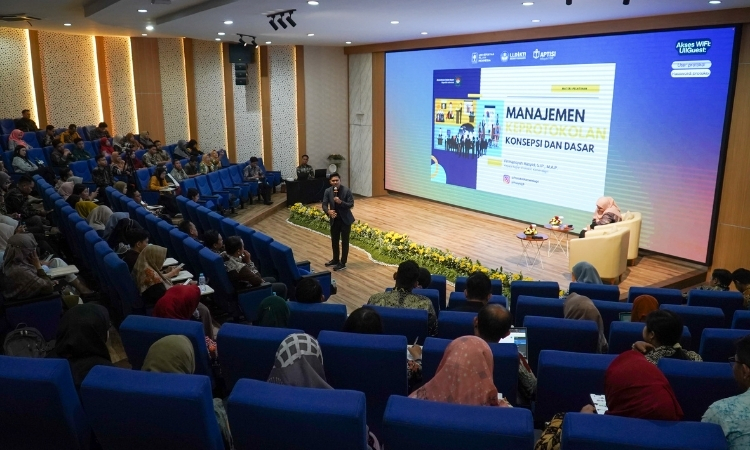
SLEMAN—Universitas Islam Indonesia (UII), in collaboration with the Indonesian Private Universities Association (APTISI) Region V Yogyakarta, organized a protocol training session at the Sardjito Building, UII’s Main Campus, on Saturday, November 16, 2024 .
The training, themed “The Role of Protocol in Upholding Institutional Image and Integrity,” aimed to enhance the capacity, knowledge, and competencies of protocol personnel in performing their duties and functions with high professionalism.
Protocol representatives from various universities, the Regional Higher Education Service Agency (LLDikti) for Region V Yogyakarta, as well as provincial and municipal governments in the Yogyakarta Special Region (DIY), were in attendance at the event.
The training featured experienced speakers in the field of protocol management, including Mohammad Reza Wardy, S.S., M.I.R., Head of Protocol and Household Services Sub-Division for the Secretariat of the Vice President of Indonesia, and Firmansyah Rasyid, S.IP., M.A.P., Head of the Protocol Division at the Leadership Administrative Bureau of the Ministry of Home Affairs of Indonesia.
The event was officially opened by UII’s Vice Rector for Resources and Career Development, Prof. Dr. Zaenal Arifin, M.Si., who emphasized the critical role of protocol in maintaining institutional image and credibility.
The first session was delivered by Mohammad Reza Wardy on the topic “The Importance of Protocol as a Strategic Public Communication Instrument.” In his presentation, Reza highlighted that protocol serves as the face or mascot of an institution.
Therefore, he said, protocol officers are required to uphold etiquette, be approachable, empathetic to guests, and respect everyone attending an event. They must also maintain a neat appearance and be adaptable to various event conditions.
Reza also emphasized the importance of seating arrangements during events. He explained that seating should consider official positions, ensure fair treatment, adapt to local culture, and remain flexible in emergencies.
While protocol rules are important, Reza noted that flexibility must be applied based on guidance from leadership during events.
“What we [protocol teams] do in the field–and thankfully, it works well–is to prepare SOPs beforehand for all guests. Near the event, if leadership decides to forego formal protocol, we adjust accordingly. At least the SOP is ready,” Reza explained.
The second session, presented by Firmansyah Rasyid, focused on “Protocol Management: Concept and Foundation.” Firmansyah highlighted that protocol management must encompass planning, organizing, directing, executing, monitoring, and evaluating.
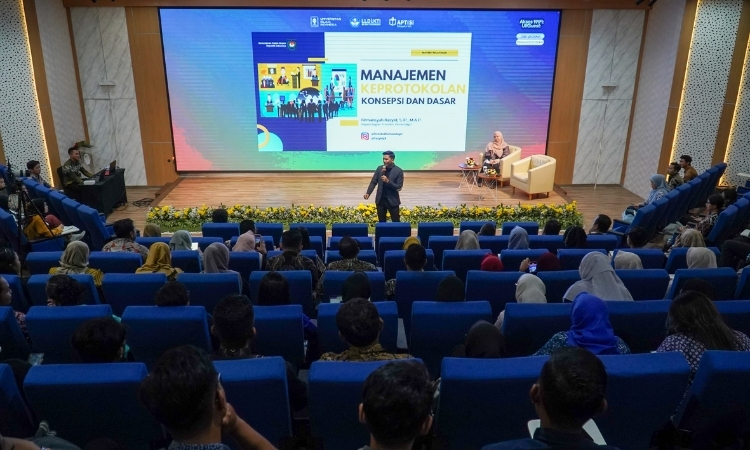
He underscored the importance of thorough planning through coordination meetings and rehearsals to avoid last-minute improvisation.
“We must pay close attention to planning. Don’t adopt a ‘cross-the-bridge-when-you-come-to-it’ approach. That’s why we have coordination meetings, rehearsals, and so forth,” he said.
“In organizing, don’t be an individualist protocol officer, acting as if you’re the only one in charge. This approach won’t work; tasks must be delegated. Protocol also involves guiding the upper leadership officials during events. Monitoring and evaluation are equally important,” Firmansyah added.
Firmansyah also shared his experiences in handling complaints during events, stressing the importance of staying calm, being responsive, and communicating effectively to find suitable solutions.
He noted that a successful event is characterized by disciplined execution, appropriate language use for each situation, and well-organized preparation.
The training provided valuable insights into the importance of proper etiquette and effective management in protocol operations, aimed at safeguarding the image and credibility of institutions.

